Learn when to Stormseal a damaged propertyRoof Restoration Quiz
Sometimes it can be hard to decide whether to tarp or Stormseal a damaged property.
If the answer is ‘Yes’ to any of the following questions, then Stormseal is the smart choice for property protection. [tooltips keyword=”①” content=”If the answer is ‘Yes’, there is likely to be a long delay before permanent repairs can be made. If the property is ‘made safe’ with tarpaulins, the tarps will probably leak, rip, or flyaway when more wind, rain or hail occurs. To prevent further damage and insurance claim escalation, weatherproof Stormseal is a far more cost-effective and safer choice.”]
Is the property one of many damaged in a catastrophic event?
Is further wind, rain or hail likely?
Has the property suffered structural damage? [tooltips keyword=”②” content=”Structural damage (e.g. from a tree fall or very strong wind) will require time-consuming assessment by an engineer before their recommended repairs can be made.”]
Are the roof materials unusual? [tooltips keyword=”③” content=”Unusual roof materials (e.g. vintage tiles, bespoke materials or asbestos) will be difficult to procure, and asbestos requires special handling, so in either case, repairs will be delayed.”]
Is the value of the repair/property/contents high?
Is the property a business location? [tooltips keyword=”④” content=”If business (including work from home) cannot continue, economic loss coverage may apply. Installing Stormseal prevents this expense by keeping the premises weatherproof and safe, enabling business to continue with minimal disruption.”]
Is it a contentious claim or likely to be cash-settled? [tooltips keyword=”⑤” content=”The purpose of a cash settlement is to simplify and shorten the claim process. Using tarpaulins on the property is likely to complicate and extend any dispute about pre-existing damage/condition and its associated costs as the insurer will be liable for any further damage caused by tarp failure.”]
① If the answer is ‘Yes’, there is likely to be a long delay before permanent repairs can be made. If the property is ‘made safe’ with tarpaulins, the tarps will probably leak, rip, or flyaway when more wind, rain or hail occurs. To prevent further damage and insurance claim escalation, weatherproof Stormseal is a far more cost-effective and safer choice.
② Structural damage (e.g. from a tree fall or very strong wind) will require time-consuming assessment by an engineer before their recommended repairs can be made.
③ Unusual roof materials (e.g. vintage tiles, bespoke materials or asbestos) will be difficult to procure, and asbestos requires special handling, so in either case, repairs will be delayed.
④ If business (including work from home) cannot continue, economic loss coverage may apply. Installing Stormseal prevents this expense by keeping the premises weatherproof and safe, enabling business to continue with minimal disruption.
⑤ The purpose of a cash settlement is to simplify and shorten the claim process. Using tarpaulins on the property is likely to complicate and extend any dispute about pre-existing damage/condition and its associated costs as the insurer will be liable for any further damage caused by tarp failure.
What is Stormseal?
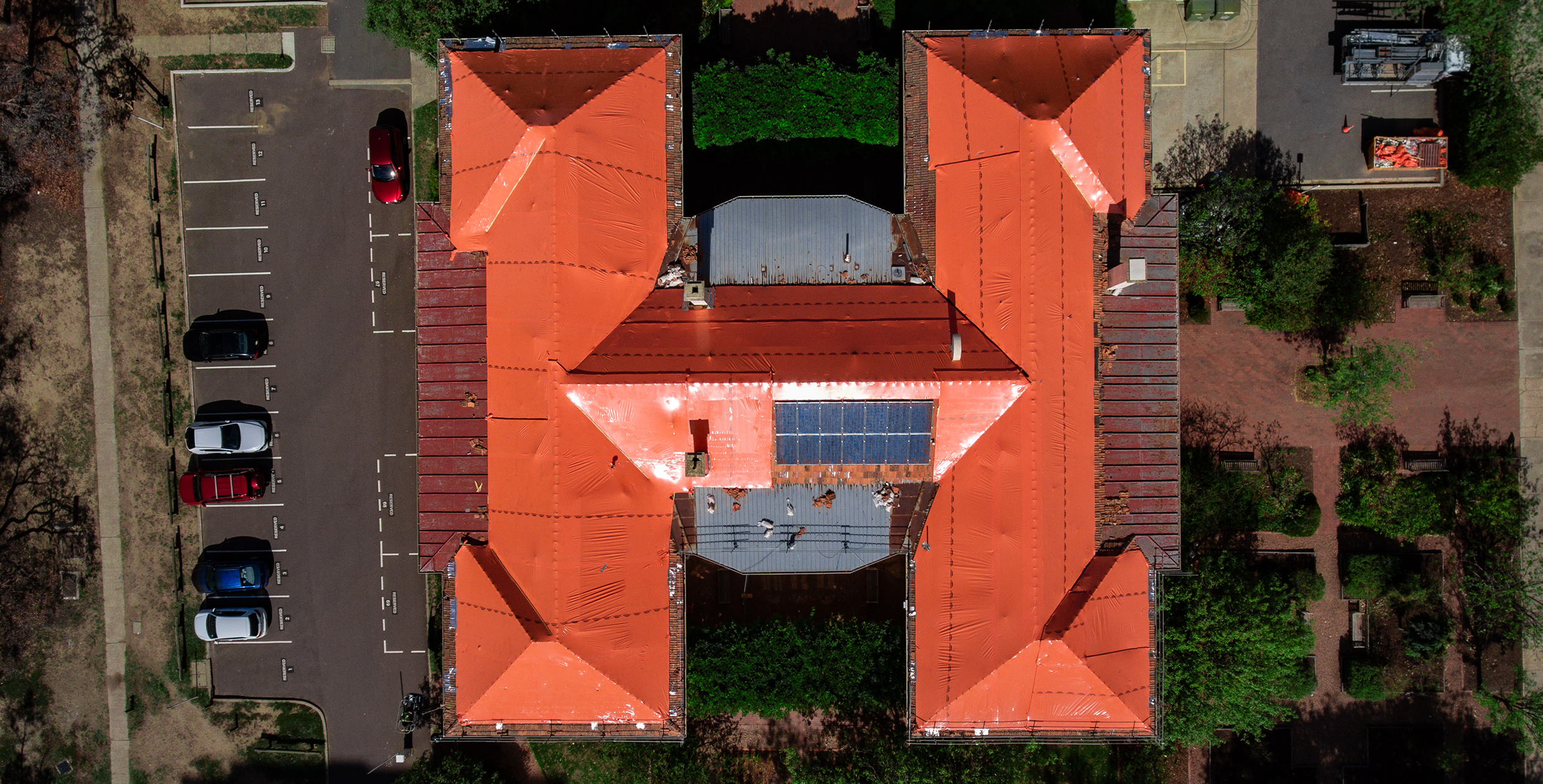
Stormseal is a polyethylene film that heat-shrinks to securely wrap a damaged roof or structure.
Unlike tarpaulins, Stormseal stays put until permanent repairs can be made, resisting wind, rain and hail and preventing further costly damage.
This award-winning innovation helps businesses and communities to recover faster from disastrous weather.
We use cookies to give you the best online experience. By agreeing you accept the use of cookies in accordance with our cookie policy. Read More
The cookie settings on this website are set to "allow cookies" to give you the best browsing experience possible. If you continue to use this website without changing your cookie settings or you click "Accept" below then you are consenting to this.